Techniques
How to Make Blended Soup
↓ Jump to recipe
Prep
15 minutes
Cook
40 minutes
Total
55 min
Serves
Makes one pot, serves 4 to 6
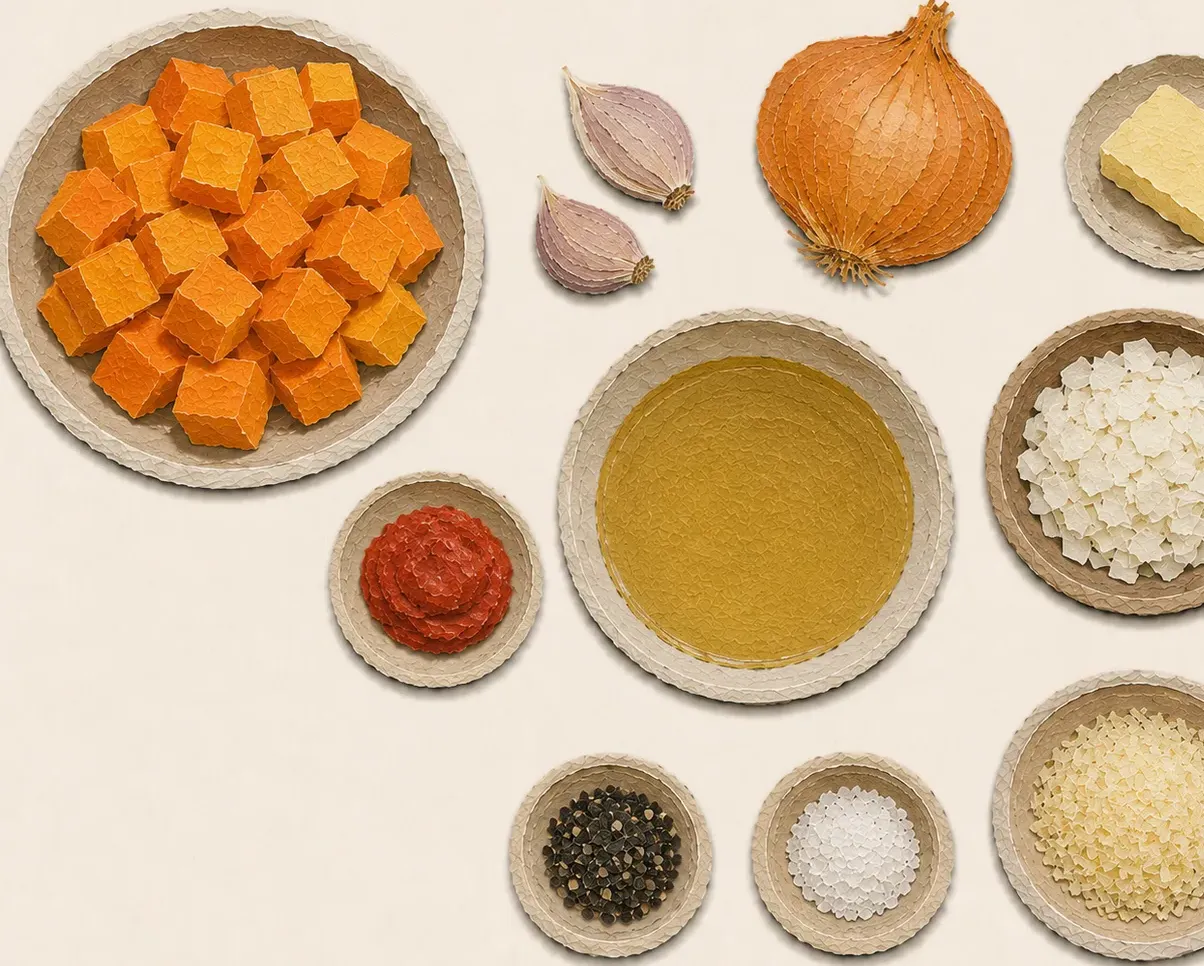
Velvety, deep, and thick enough to coat the spoon, a blended soup turns one main vegetable, a pot of stock, and a blender into something that eats like a bisque. There are two roads in. Roast the vegetables first and the soup comes out darker and sweeter, with the browned edges carrying the flavor. Simmer everything straight in the pot and it comes out cleaner and faster, one pot, no oven. Either way the blender does the thickening, so the soup gets its body from the vegetable itself instead of flour.
Ingredients
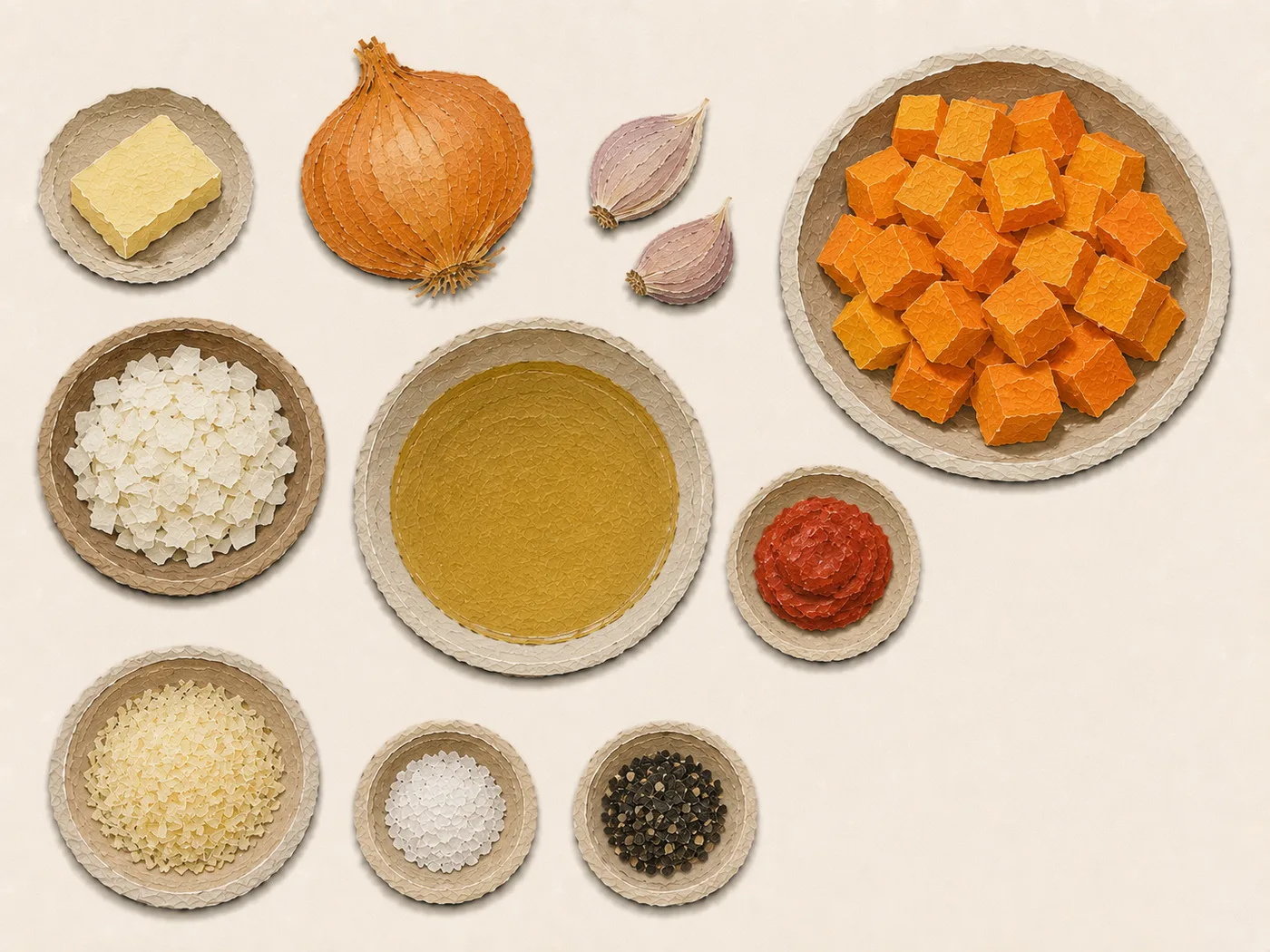
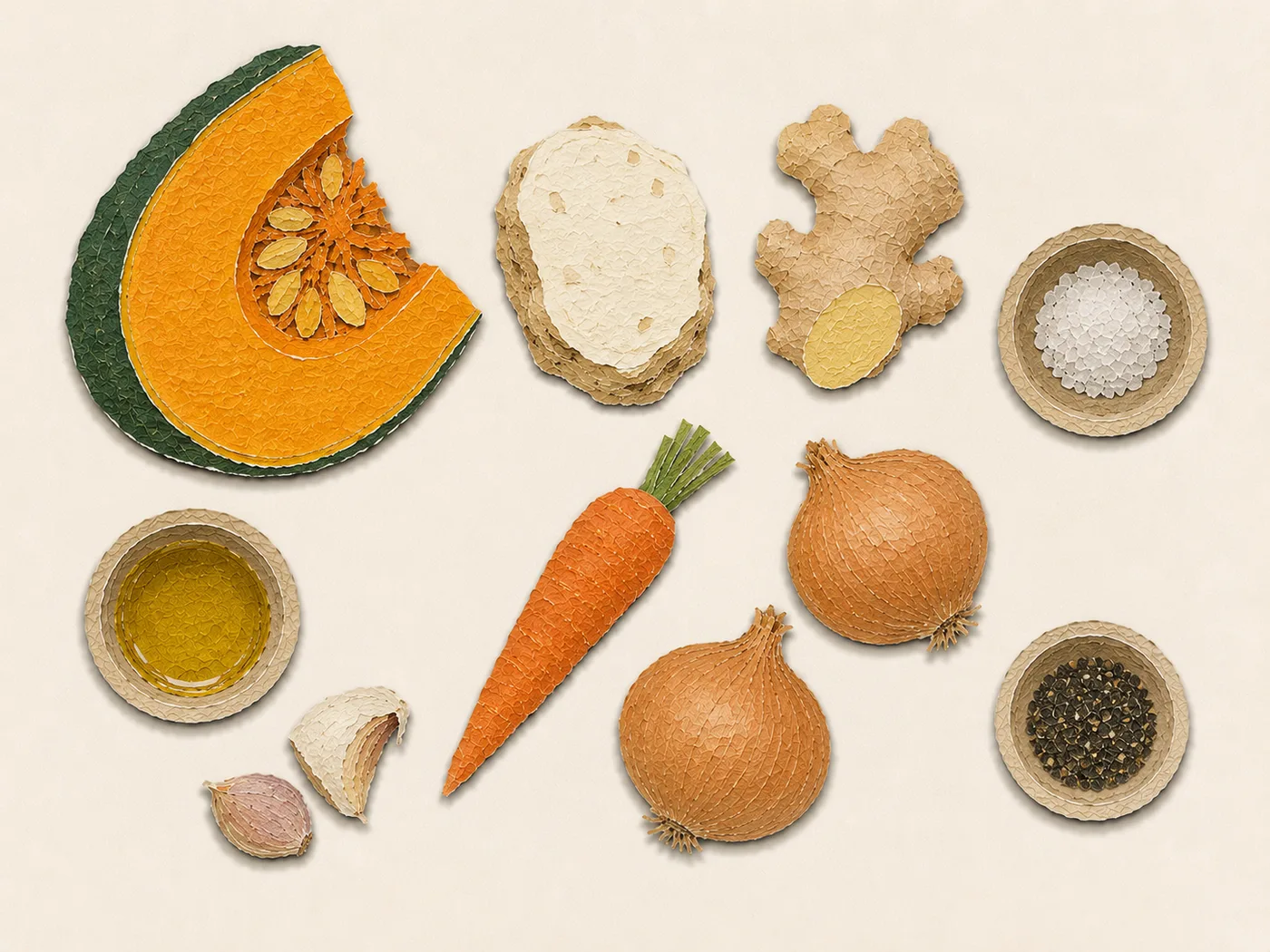
- 2 lb (1 kg) one main vegetable: pumpkin, squash, potatoes and leeks, carrots, broccoli, cauliflower, zucchini, or tomatoes
- 1 onion, chopped
- 2 to 3 garlic cloves, smashed
- 2 tablespoons olive oil or 30 g (2 tablespoons) butter
- 750 ml to 1 liter (3 to 4 cups) stock or water
- salt and black pepper
- to finish: 1/4 to 1/2 cup (60 to 120 ml) cream, a knob of butter, or 1 oz (30 g) grated Parmesan
- to lift: a squeeze of lemon or a small splash of vinegar
Instructions
- 1Pick the route. Roasting gives a deeper, sweeter, bisque-style soup. Simmering gives a faster, cleaner one. The pot work is the same after that.
- 2Roasted route: heat the oven to 220C (425F). Toss the main vegetable with half the fat and a pinch of salt on a sheet pan. Roast for 25 to 30 minutes, turning once, until the edges brown and the pieces are fully tender.
- 3In a soup pot, warm the remaining fat over medium-low heat. Cook the onion and garlic gently for 5 to 7 minutes, until soft and fragrant but not browned.
- 4Add the vegetable: roasted pieces straight from the sheet pan, or raw pieces if you are simmering.
- 5Pour in stock until it barely covers the vegetables. Less liquid now means a thicker soup later, and you can always loosen it at the end.
- 6Simmer gently until a knife meets no resistance: 5 to 10 minutes for roasted vegetables, 20 to 25 minutes for raw.
- 7Blend until completely smooth. Use an immersion blender in the pot, or work in batches in a stand blender filled no more than halfway with hot soup.
- 8Finish off the heat: stir in the cream, butter, or cheese, then season with salt and a squeeze of lemon until the flavor opens up.
- 9Check the body. The soup should coat a spoon without holding a peak; thin with hot stock if it stands too thick.
Cook's Note
The blender is where this soup is won. Run it longer than feels necessary, a full minute or more, until there are no fibers left. If you use a stand blender, vent the lid and drape a towel over it; hot soup expands. Season fully only after blending, because the flavor concentrates once the pot is smooth.
How to Use This
This is the method behind Creamy Pumpkin Soup with Ginger (the roasted route) and Creamy Pumpkin Soup with Parmesan (the simmered route), and it runs almost any vegetable: carrot with ginger, broccoli with cheddar, cauliflower with browned butter, tomato with basil. One vegetable plus one finishing idea is a complete soup. For brothy, chunky soups where nothing gets blended, follow the Basic Soup Base Rule instead.
Why This Method Works
Blending releases the vegetable's own starch and pectin, which thicken the soup naturally with no flour or roux. Roasting first drives off water and browns the vegetable's sugars, which is why the roasted route tastes deeper than the simmered one with the same ingredients. The finishing fat coats the blended particles and reads as richness, and the acid at the end keeps that richness from going flat.