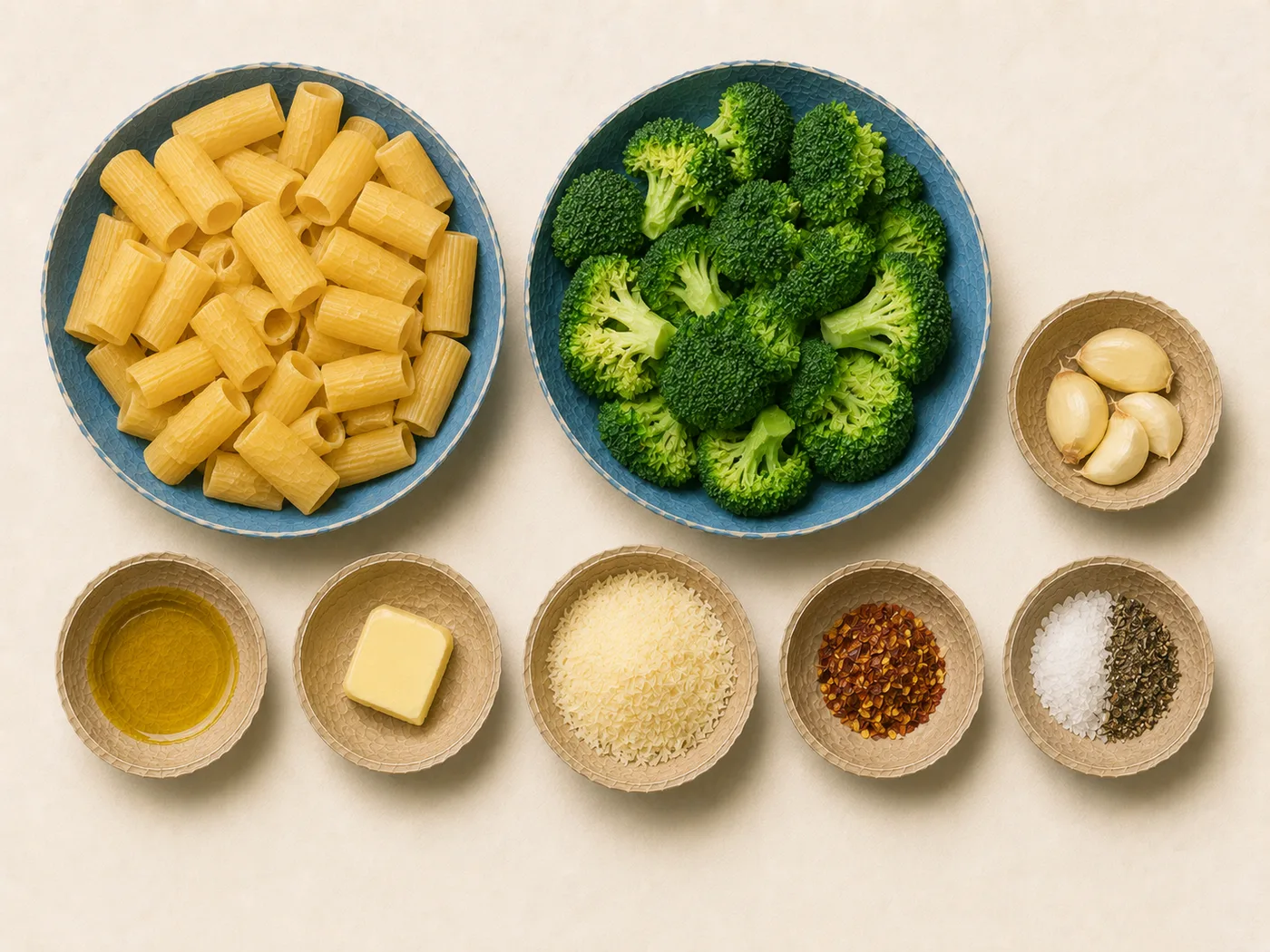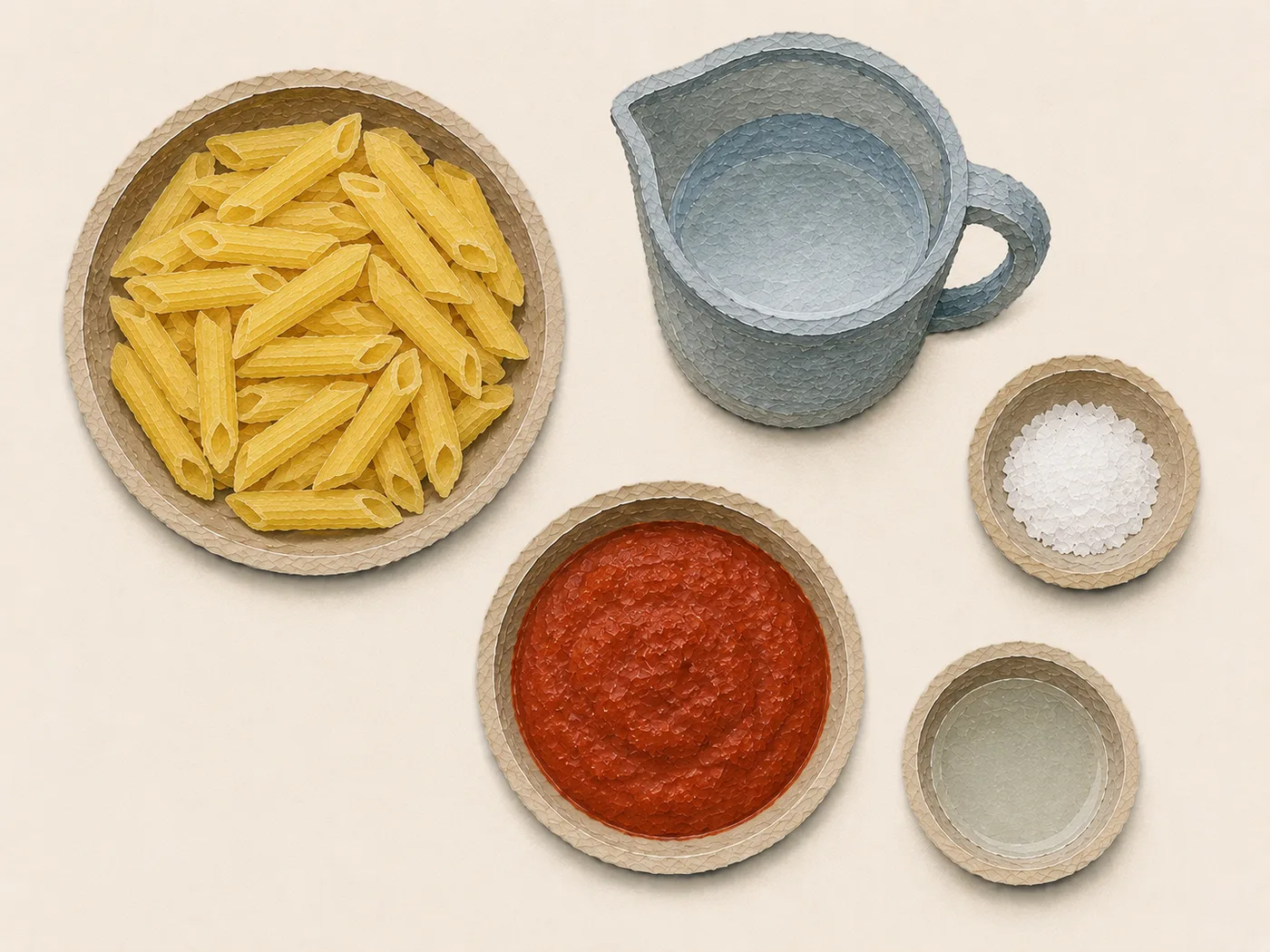
A good pasta dinner starts before the sauce. Plenty of water, enough salt, the right doneness, and finishing the pasta in the sauce are what make it feel complete instead of flat or slippery.
Ingredients
- 450 g dried pasta
- 4 quarts water
- 1 1/2 to 2 tbsp kosher salt
- sauce, ready to finish the pasta
- reserved pasta water, as needed
Instructions
- 1Bring a large pot of water to a full boil.
- 2Salt the water just before adding the pasta.
- 3Add the pasta and stir well for the first minute.
- 4Cook until just shy of al dente , checking by tasting instead of relying only on the box.
- 5Reserve at least 240 ml pasta water before draining.
- 6Move the pasta straight into the sauce or into a pan where the sauce is waiting.
- 7Add a splash of pasta water and toss until the sauce turns glossy and coats the pasta.
- 8Serve at once.
Cook's Note
Cook the pasta until just shy of where you want it, then finish it in the sauce. The best test for al dente is tasting it: the pasta should feel firm and toothsome, not hard, with no chalky center. Save pasta water before draining, because that starch is what helps the sauce turn glossy and cling.
How to Use This
Use this method anytime you are cooking dried pasta for a sauced dish. Bring the water to a full boil, salt it well, add the pasta, and stir right away. Start tasting before the package time says it should be done. If the pasta will finish in sauce, drain it when it is just shy of your ideal texture. Move it into the sauce with a splash of pasta water and toss until the sauce looks glossy and coats the pasta. Add more pasta water only as needed. If the pasta will be served plain, baked, or mixed into something cold, adjust the timing. Cook it a little further for plain buttered pasta, pull it earlier for baked pasta, and rinse only when you are making a cold pasta salad or another dish where loose starch would make it gummy.
Why This Method Works
Plenty of water helps keep the pasta from clumping as it cooks. Salt seasons it properly, finishing at al dente keeps it from turning soft in the sauce, and pasta water helps bind the sauce so it coats instead of pooling.
Make It Yours
- Use short pasta for chunkier sauces and vegetable-heavy dishes.
- Use long pasta for smoother sauces and lighter finishes.
- Pull the pasta earlier if it will finish longer in the sauce.
- Save more pasta water than you think you need.
Leftover Strategy
Drain leftover pasta, toss with a bit of olive oil, and refrigerate for up to 5 days. Reheat gently in boiling water or a skillet, or turn cold pasta into a salad, frittata, or stir‑fried noodles with your favorite vegetables and sauce.